Der Erlkönig and The Stolen Child

Today I have a few quite important and urgent things to work on. So obviously my brain has decided to focus in on a somewhat less critical and less urgent matter – the parallels between Der Erlkönig and The Stolen Child. In university one of the few “records” I had was Fisherman’s Blues by the Waterboys, which contains an incredibly beautiful version of Yeats's poem, The Stolen Child, https://www.youtube.com/watch?v=DDkK4VrmFQQ .
The Stolen Child is one of those poems that most people in Ireland can quote lines from, even if they don’t realise it (“to the waters and the wild”, “from a world more full of weeping than he can understand”, … the words themselves are so beautiful in themselves). It was only when I heard this song that I started to think about the actual text, which is quite sinister, about a child being tempted away from the human world to go and live with the faeries – literally “stolen”. In the poem, it all sounds wonderful, but the reader can take a step back and see it as the tragedy it is.
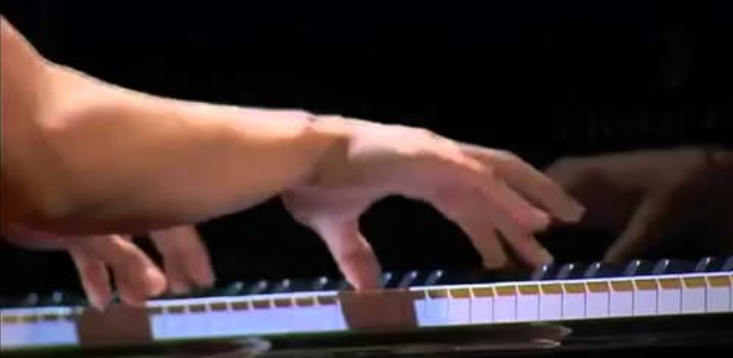
I first heard the Erlkönig as piano music, a Liszt transcription of Schubert’s song. https://www.youtube.com/watch?v=4_BmRekeJ8A . I suppose the rock analogy of this would be Jimi Hendrix improvising live on a melody by Paul McCartney. While Schubert composing music based on a poem by Goethe might remind one of Beethoven composing music based on a poem by Goethe's mate Schiller, which worked out quite well.
Eventually I was curious enough to wonder what kind of poem could have inspired such dramatic music, so I listened to the original song, https://www.youtube.com/watch?v=Mrgvbd_OfsA , (I’m sure there are better versions).
And eventually I was even curious enough to try to figure out the words – probably when faced with another urgent need to procrastinate. Apparently this poem has a similar place in German popular culture, with most people being aware of it and able to quote lines from it. (Any Germans, feel free to tell me I'm wrong about this!).
Superfically, the songs are very different, musically and textually. Der Erlkönig is much more brutal and violent than The Stolen Child, and the drama of Schubert's music compares with the quiet beauty of the Waterboys song with the vocals by Tomás Mac Eoin. But there are also very similar passages in which the Erlkönig (a malevolent Elf-king from Danish folklore) tries to tempt the young boy with promises of the joyous life that awaits him. Even listening to the piano version, you can clearly hear which these are.
The other difference is that in the Erlkönig, the boy does not give in to temptation, and the Erlkönig then tries to take him by force, and eventually the boy dies. But is this really a different ending, or does Yeats imply an equally tragic ending, just without saying it? Goethe shows us the tragedy for the poor father who tries to calm his son and then is powerless to save him. Yeats leaves all that to our imagination.
I’m sure I’m not the first to notice the similarity between the original poems – although a quick internet search suggests no evidence that either Yeats had even read Goethe’s poem, or that Goethe had invented time-travel and travelled forward in time to be inspired by Yeats’s poem – although, knowing Goethe’s incredible prowess at pretty much everything, I wouldn’t put it past him. But maybe I’m the first who was ignorant enough to first encounter both as stunning music and only many years later to actually listen to the words …
What's wonderful about great poetry is that you can interpret it however you like. Are these poems literal, metaphorical, symbolic? It doesn't matter. There is no right answer. You read them, you ponder the text and they change you - you're not the same person afterwards as you were before. (in my case at least, this has always seemed like a good thing ...)
Another powerful song these reflections bring to mind is "In Germany before the War" - a Randy Newman song that I first heard sung by Freddie White. I remember at the time how we shared this (i.e. we listened to it in each other's houses) and listened to it multiple times. But we were young and single then. I find this very hard to listen to these days, so I recommend it only to the people without young children ... https://www.youtube.com/watch?v=YNThC_Otw94